The influencer accountability gap: what CMOs can no longer ignore
Influencer marketing has matured from experimental budget line to core channel, yet most brands still lack the governance structures to match that investment. This article examines what serious influencer accountability looks like and what CMOs need to put in place before the next crisis lands.
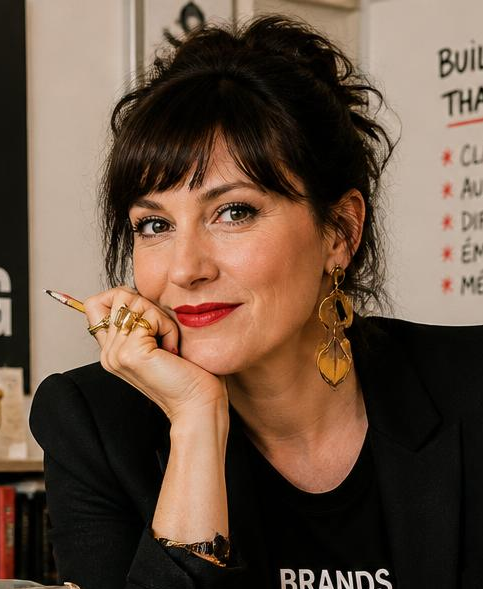 Ada BrandtBrand & Marketing StrategistJuly 18, 2026
In early 2025, a mid-size beauty brand discovered that roughly 40% of the engagement on a flagship influencer campaign had been generated by bot accounts. The campaign had delivered impressive surface metrics. The agency had signed off. The influencer had been paid. Nobody had built a contractual or technical mechanism to catch the problem until an internal audit flagged the discrepancy six months later. The money was gone. The relationship was already over.
That kind of story is no longer unusual. What's changed in 2026 is that the financial stakes have risen sharply enough that boards and CFOs are now asking questions marketing teams are not always prepared to answer.
The state of influencer marketing in 2026
The channel has genuinely scaled. Meta's creator monetisation tools, TikTok's expanded partnership infrastructure, and YouTube's continued dominance in long-form sponsored content mean that influencer spend is embedded in most large brand budgets, not treated as a side experiment. Influencer marketing platform Influencer Marketing Hub (a vendor, with the caveats that implies) has estimated the global market at above $24 billion in recent years, and independent analysts broadly confirm continued double-digit growth.
At the same time, the creator economy has fragmented. Mega-influencers (ten million followers and above) now command rates that make ROIROIReturn on Investment: the ratio of net profit to the cost of an investment. A 300% ROI means each dollar invested returns $3.View full definition → justification genuinely difficult outside a handful of categories. The real action has shifted to the mid-tier, roughly 100,000 to one million followers, and to so-called nano-creators for highly targeted community plays. This is not a stylistic preference. Data from Nielsen's 2024 annual marketing report (an independent research firm) showed that micro and mid-tier creators consistently outperform on conversion metrics relative to cost, even if brand awarenessbrand awarenessThe degree to which your target audience recognises or recalls your brand, either prompted or unprompted. It measures how present your brand is in people's minds.View full definition → lift remains higher with larger accounts.
Alongside this, AI-generated synthetic influencers have moved from novelty to operational reality. Lil Miquela has been around for years, but brands including Samsung and Prada have experimented with fully virtual spokespersons, and several Asian markets now run significant campaigns on AI-native creator personas. The regulatory and disclosure landscape around these formats is still catching up, which creates both opportunity and legal risk depending on jurisdiction.
The fraud and brand-safety problem has not been solved
Engagement fraud remains structurally unresolved. Third-party verification tools like HypeAuditor or Modash (both vendors with a commercial interest in the problem appearing solvable) provide useful signals, but no tool eliminates the issue. More nuanced threats have also emerged: context misalignment, where a creator's content shifted in tone or political direction after a contract was signed; undisclosed secondary sponsorships that dilute message authenticity; and AI-generated comment spam that artificially inflates sentiment scores.
The FTC updated its endorsement guidelines in 2023, and enforcement actions have followed in 2024 and 2025 against brands and creators who failed to disclose paid relationships adequately. The liability can land on the brand, not just the creator.
What this means for the CMO
The first implication is contractual. Most influencer contracts written before 2023 do not contain clauses that address fraud thresholds, exclusivity windows that account for competing sponsored content, or disclosure compliance requirements tied to specific platform formats. Rewriting the standard creator agreement is not a legal formality, it is a risk management decision that belongs in the CMO's mandate.
The second implication is measurement architecture. Many teams are still evaluating influencer campaigns on reachreachThe number of unique people exposed to your message in a given period. Unlike impressions, reach counts each person once, no matter how often they see it.View full definition → and impressionsimpressionsThe total number of times an ad or piece of content is displayed, regardless of clicks. Each display counts as one impression, even to the same person.View full definition →, which are the metrics most easily gamed. The shift that serious marketers are making is toward incrementality testing: running holdout groups, tracking downstream conversion attributionconversion attributionAttribution modeling is the method of assigning credit for a conversion across the marketing touchpoints a customer interacted with before buying or signing up.View full definition →, and comparing influencer-driven cohorts against baseline performance. This requires integration with the broader data stack, meaning close coordination with the CDO or head of analytics. It also requires patience, since the data cycle is longer than a typical campaign sprint.
The third, and most structurally important, implication is governance. Influencer marketing at scale needs an internal owner who is not also responsible for campaign execution. When the person approving creator relationships is the same person responsible for hitting quarterly reach targets, the incentive structure almost guarantees that due diligence gets compressed. Several large CPG companies have addressed this by creating a dedicated creator partnerships function that sits separately from campaign management, with its own audit responsibilities.
Creator relationships also need to be thought of as long-term brand assets, not transaction-by-transaction media buys. Dove's long-running creator partnerships around Real Beauty messaging have delivered more durable brand equitybrand equityThe commercial value your brand adds beyond functional product attributes: the price premium, preference and loyalty it generates.View full definition → than any individual campaign spike. The value compounds when audiences observe consistency over time, and that only happens through deliberate retention of specific creators rather than rotating through whoever is trending.
Concrete actions worth taking now
- Audit your existing creator contracts for FTC compliance, fraud threshold language, and exclusivity clauses. If a contract does not specify what happens when a creator is found to have fraudulent followers, you have no recourse.
- Build an influencer measurement scorecard that includes at least one incrementality metric alongside reach. Even a simple matched-market test run over a single quarter will give you more usable data than a year of impressionimpressionThe total number of times an ad or piece of content is displayed, regardless of clicks. Each display counts as one impression, even to the same person.View full definition → reports.
- Separate the approval function from the execution function for any creator partnership above a set spend threshold. Define that threshold explicitly rather than leaving it to judgment.
- Assess your exposure to synthetic creator formats. If you are in a regulated category, fashion, food, financial services, the disclosure requirements around AI-generated personas are still evolving and vary significantly by market. Legal review now is cheaper than enforcement response later.
- Invest in two or three deeper creator relationships per year rather than distributing budget thinly across twenty. The compounding audience trust effect is real, and it is not achievable through transactional one-off posts.
The brands that have treated influencer marketing as a media channel governed by the same rigor as paid search or TV are the ones coming into 2026 with usable data, manageable risk, and genuine creative partnerships. The ones that treated it as a shortcut to authenticity have mostly learned that authenticity cannot be purchased, only earned through consistent, well-governed investment.
Finished reading?
Validate your read to earn XP and feed your radar.