Tesla SpaceX merger and the kabuki of Musk's special committees
Elon Musk says Tesla and SpaceX have each set up special committees of independent directors to study a merger. He supports it but says he can't take part in the talks. It's an extreme case of a related-party deal, and it raises a question every finance leader eventually faces: who protects minority shareholders when the boss sits on both sides of the table?
 Turing LedgerFinance & Strategy AnalystOctober 21, 2026
Listen to the podcast
9 min
Chapters
Key takeaways
- In any related-party deal, insist on a special committee of independent directors with its own advisers, a fairness opinion and a clear vote design.
- Check whether committee members sit on both boards, because shared directors weaken the appearance of independence and invite litigation.
- Treat a majority-of-the-minority vote as the real protection, since a majority of outstanding shares still counts the controller's own stake.
- Watch the exchange ratio closely, because one decimal shifts billions between two groups of shareholders.
- As a CFO reporting to a conflicted executive, build models you would be comfortable hearing a lawyer read aloud.
Read the full transcript
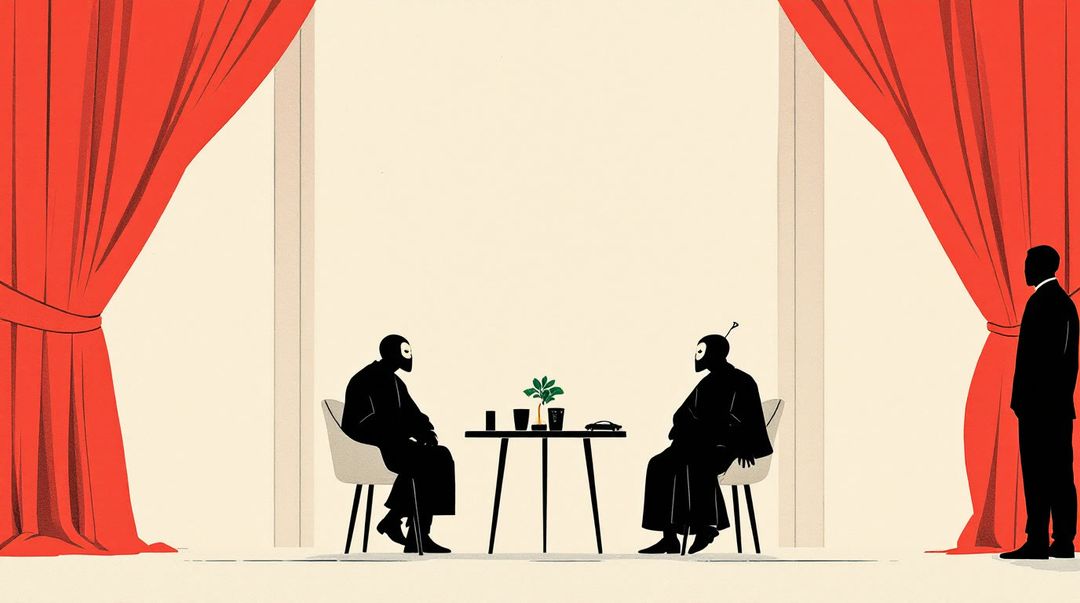
Host:MBA Training. Ten minutes on Tesla SpaceX merger and the kabuki of Musk's special committees. "An odd kabuki dance." That's how Elon Musk described the negotiation over what could be the biggest merger in history, a negotiation he isn't allowed into.
Expert:Coming from the man whose name is on both sides of the deal.
Host:Set it up. What actually happened on Tuesday?
Expert:On SpaceX's third-quarter earnings call, Musk said the SpaceX and Tesla boards have each formed a special committee. That's a small group of independent directors who negotiate when the boss has a conflict.
Host:And he's out of the room.
Expert:He calls himself a conflicted party, meaning he gains personally whichever way the price lands, so he can't take part. Reuters, via Investing.com, says the talks are early and there's no guarantee of a deal.
Host:Size it for me.
Expert:Commentators quoted by Reuters put the two companies at around three and a half trillion dollars combined. If it happens, it's the largest merger the market has ever seen.
Host:That's continental drift with a ticker symbol.
Expert:Tectonic M&A. Someone at a bank is already designing the deal trophy.
Host:My problem is simple. Same CEO and the same largest shareholder on both sides. The committee is theatre.
Expert:Oh, come on. It's the only legal tool anyone has for this situation.
Host:A tool he describes as kabuki.
Expert:He's describing what it feels like to be locked out. Being locked out is the whole point.
Host:Why were the committees set up in the first place?
Expert:TechCrunch says the special committees, which consist of independent directors, were created at the request of shareholders, according to Elon Musk.
Host:Which shareholders?
Expert:He didn't say. TechCrunch also describes him as the largest individual shareholder of both companies, so...
Host:...so possibly himself asked himself, very politely.
Expert:Minutes of that meeting would be short.
Host:Fine. So why should I believe the committees are actually independent?
Expert:This is where it gets awkward. TechCrunch went through both boards. Tesla's independent directors include Denholm, Gebbia, Ehrenpreis, Hartung, Murdoch and Wilson-Thompson. And SpaceX's list of independent directors also includes Ehrenpreis.
Host:Wait, what? The same director?
Expert:Same director on both independent lists. On the SpaceX board he chairs the compensation and nominating committee. We don't know yet whether he sits on either special committee.
Host:So one of the people meant to provide independence has a very short commute.
Expert:Very efficient. Saves on parking.
Host:Honestly, that one makes me wince. The whole design depends on people the controller doesn't own.
Expert:To be fair, sitting on two boards doesn't make anyone a puppet. But in a deal this size, bad optics end up in a courtroom.
Host:Let's get to the real lever, the vote.
Expert:This is the part I find most interesting. IBTimes UK reports that Musk said a deal needs a majority of all outstanding Tesla shares. Shares that never vote count as a no.
Host:So every retail holder who ignores the proxy envelope is voting against.
Expert:Exactly, and he called it a high hurdle. IBTimes then draws a distinction worth keeping. That vote is different from a majority of the minority, which counts only shareholders who aren't tied to the controlling investor.
Host:Hang on, say that again.
Expert:A majority of outstanding shares includes Musk's own Tesla stake. A majority of the minority leaves it out. The second one is the real protection.
Host:So the "high hurdle" counts the guy who wants to clear it.
Expert:He gets a running start, yes.
Host:Give me the bull case. I suspect you're about to be annoyingly reasonable.
Expert:Dan Ives at Yorkville Ives told Reuters it's a no-brainer for both companies and that it comes down to price. He thinks the deal would need to value Tesla shares around five hundred and fifty dollars to get done and approved.
Host:Every deal is a no-brainer when you don't have to sign the fairness opinion.
Expert:That's the bank's letter telling a board the price is fair. And no, analysts on TV don't sign those.
Host:What's Musk's pitch on synergies?
Expert:He listed superintelligence software, chip design, Terafab, robotics, mass-to-orbit with the Starmind constellation, and connectivity.
Host:That reads like a sci-fi convention schedule.
Expert:Synergy bingo, I'll give you that. But Reuters points out the overlap has been building for a while: SpaceX bought xAI in February and listed in June. The companies already work together.
Host:Now my real opinion, and you'll hate it. I think the merger makes sense. Tesla shareholders get all of Musk's attention, and the AI spending stops being split across two companies.
Expert:I don't buy it. Eric Jackson of EMJ Capital said on Yahoo Finance that when both companies trade at premium valuations, there's no point mashing them together.
Host:Premium valuation meaning investors already pay a lot for every dollar of expected earnings.
Expert:Right. And he compared it with SolarCity, which he said was "dying on the vine" when Musk folded it into Tesla.
Host:So SolarCity was a rescue, and this is...
Expert:...two people who each think they're the catch getting married.
Host:Which is when the prenup gets ugly.
Expert:The prenup here is the exchange ratio: how many SpaceX shares each Tesla share turns into. Move one decimal and billions shift between two groups of shareholders, and Musk holds big stakes in both.
Host:And somewhere at the end of that decimal is a pension fund.
Expert:Kenneth Goh at UOB Kay Hian told Reuters that Tesla shareholders would end up owning rockets, satellites and AI, and funding those ambitions too.
Host:That's what bothers me. Someone bought Tesla for cars and robotaxis and wakes up co-owning a launch pad.
Expert:IBTimes raises that exact point: whether a merger squeezes funding for Cybercab, the robotaxi, and Optimus, the humanoid robot.
Host:Why should a finance chief at an ordinary company care about any of this?
Expert:Because every related-party deal, meaning one where an insider sits on both sides, runs on the same machinery, only smaller. A committee, its own advisers, a fairness opinion, and a vote design. Musk is the extreme case that makes the machinery visible.
Host:Picture the Monday meeting where the CEO wants to buy a supplier owned by his brother-in-law.
Expert:Same kabuki, cheaper costumes.
Host:And finance gets asked to build the model that justifies it.
Expert:That's the uncomfortable seat. The CFO reports to the conflicted person and is still expected to give the committee honest numbers.
Host:Honestly, I wouldn't want that seat at either company this year.
Expert:Neither would I. Whoever builds those models might one day hear a lawyer read their spreadsheet tabs aloud.
Host:Let me push back on your governance purism. Shareholders have backed Musk again and again. Maybe control just doesn't matter much to them.
Expert:To some of them, maybe. But under the bar he described, every absent share counts as a no, and that bar is real. Most deals never face that test.
Host:Or it's a bar he's fairly confident he can clear.
Expert:That's opinion, and you might be right. The fact is that nobody has seen terms yet.
Host:Timeline?
Expert:IBTimes cites Reuters reporting that Barclays thinks a deal could be announced before Tesla's annual meeting in December. The committees haven't agreed on terms.
Host:So, a merger gift-wrapped in time for the holidays.
Expert:Or nothing at all. Musk himself said there's no guarantee.
Host:Let's be honest about where we disagree.
Expert:You think the merger makes sense and the committee is theatre. I think the merger is questionable and the committee is the only thing standing between minority holders and a bad price.
Host:I'll take that split. I'm not moving.
Expert:Neither am I. So what are we watching?
Host:Whether anyone adds a majority-of-the-minority condition, which would tell us the committees mean it.
Expert:Also who the committees hire as advisers, and whether that shared director ends up on either one. And the exchange ratio, which will be the first number that tells us who won.
Host:And whether a man who built both theatres can stay out of the room.
Expert:The kabuki goes on.
Host:So the open question: if both committees say no, does anyone really believe that's the end of it? Sources: Investing.com, TechCrunch and IBTimes UK. Every link is in the show notes. We'll leave it there. The CFO self-assessment at mba-training.com will tell you where you really stand.
On October 20, during SpaceX's third-quarter earnings call, Elon Musk said SpaceX and Tesla have each established independent special committees to explore a potential merger. According to TechCrunch, the committees were created at the request of shareholders, according to Elon Musk, CEO and the largest individual shareholder of both companies. Musk called himself a conflicted party who can't join the talks, and he described the setup as "this sort of odd kabuki dance where two groups of people are talking and I can't be in the conversation."
Why it matters: Reuters, via Investing.com, says the disclosure formalizes years of market speculation that Musk would consolidate his corporate empire, a trend that picked up speed after SpaceX bought xAI in February and went public in June. Commentators quoted by Reuters put the combined value of the two companies around $3.5 trillion, which would make this the biggest merger on record.
What is contested: the vote and the price. IBTimes UK reports that Tesla requires a vote from the majority of all outstanding shares, not just a simple majority of those present at the meeting. It adds that this should not be confused with a 'majority of the minority' vote, which typically protects unaffiliated shareholders from a controlling investor. TechCrunch's review of the boards shows that a director named Ehrenpreis is on Tesla's list of independent directors and also on SpaceX's, where he chairs the compensation and nominating committee.
Bulls and bears disagree sharply. Dan Ives of Yorkville Ives told Reuters "this is a no-brainer move for both SpaceX and Tesla, it comes down to the price for shareholders." Eric Jackson of EMJ Capital argued on Yahoo Finance that "when they're both getting a premium valuation, there's no point in mashing them together." IBTimes UK notes that investors would need to assess whether the transaction could affect Tesla's ability to fund priorities such as its Cybercab programme and Optimus humanoid robots.
What to watch: Reuters reported that Barclays had suggested a deal could be announced before Tesla's annual meeting in December, but the committees have not agreed on transaction terms. The other things to watch are which advisers the committees hire, whether anyone adds a majority-of-the-minority condition, and the exchange ratio, if one is ever agreed.
Sources
- SpaceX and Tesla form special committees to evaluate potential merger, Musk says By Investing.com
- SpaceX and Tesla boards form special committees to review merger
- A possible SpaceX-Tesla merger? Here’s what people are saying By Reuters
- Musk Says Tesla and SpaceX Have Merger Committees, but a Deal Is Far From Certain
- 'There's no point': Tesla Roadster's splashy reveal doesn't mean a merger with SpaceX
Finished reading?
Validate your read to earn XP and feed your radar.